The Breakfast Club © Jamie Miller

Creative Nonfiction, #22, Spring 2022

Catherine Con, Mangifera Indica
Brad Gibault, The Myth of Pat
Mark Lucius, When You Wish Upon An All-Star
Beverley Stevens, A Proper Sunday Lunch
Marianne Worthington, Young and Red-headed

Featured Artist

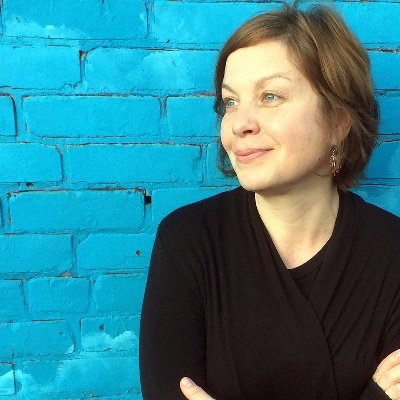
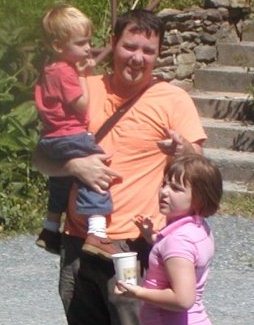
Jamie Miller

The Spring issue is live, and the #BarnhillPrize is open. Life is good!

Catherine Con is back with another lush mystery-tinged narrative; this time her words bring us into a sensuous, dream-like meditation on wild mangoes. Brad Gibault leverages both humor and Greek mythology to explore his relationship with his school bus driver, Pat. Mark Lucius brings us back to witness how, at 10 years old, he faced more grown-up ethical decisions than have some adults and changed the athletic resumes of more than one person. Beverley Stevens sets a place for us at her grandmother’s formal dining table. Marianne Worthington uses her poet’s heart perspective on memories of her mother, angels, ghosts, and more.

And Jamie Miller with her art — well, you know how I feel about that.

EDG

P.S. And the #BarnhillPrize is open for submissions!

The Barnhill Prize honors Anne Clinard Barnhill’s generous spirit of support for all who love to read and write; her lifelong empathy with those who mine their childhood experience to understand themselves now; the natural vulnerability in her compelling prose and poetry; and her boundless generosity in sharing her writing passions with the world.

©Sonja Livingston

We are thrilled to announce that Sonja Livingston will award the 2022 Anne C. Barnhill Prize for Creative Nonfiction. Personal note from EDG: I studied with Sonja at #WVWCMFA when she was a visiting professor. She is warm, brilliant, and humble. I am so pleased she said yes! She also created a delightful and insightful series of interviews on her YouTube channel, The Memoir Cafe. Go there and subscribe.

Sonja is an associate professor of English at Virginia Commonwealth University (VCU) in Richmond, and teaches in the Postgraduate Program at Vermont College of Fine Arts (VCFA). She has taught at the University of Memphis and in The Writing Workshops Abroad for the University of New Orleans in Edinburgh, San Miguel de Allende and Cork.

Things to do today:

  • Learn more about Sonja on her website: https://www.sonjalivingston.com
  • Read her gorgeous CNF: The Virgin of Prince Street: Expeditions into Devotion; Queen of the Fall: A Memoir of Girls and Goddesses; Ghostbread; Ladies Night at The Dreamland; and her wonderful CNF guide, Fifty-Two Snapshots: A Memoir Starter Kit. (All available through links on her website and wherever books are sold.)
  • Read about the #BarnhillPrize on our website and familiarize yourself with our mission.
  • Follow our blog to stay current on contest information as we move toward June 1.
  • Follow us on Twitter, our favorite hangout on the socials: @LongridgeReview
  • Follow Sonja on Twitter: @SonjaLivingston
  • Start penciling out your own essay for our contest. Submissions open June 1 and close July 31, 2022.
Read the #BarnhillPrize-winning essays to date:
2019: Suburbs Plagued by Foraging Deer
2020: 4 Generations of Black Hair Matters
2021: How to Make Jeweled Rice (Shirin Polo)

Most of all, be inspired, get excited, and write on!

We are delighted to share that #BarnhillPrize finalist Douglas Imbrogno (The Egg, Issue 20, Fall 2021) will read from his WIP memoir tonight in Huntington, WV; he will be joined via Zoom by the beloved Homer Hickam. Hear it straight from Doug …. and you can Zoom in, too:

“The “Writers Can Read Open Mic Night” monthly series resumes 7 p.m. tonight (Monday, FEB 21) with Homer Hickam and myself as featured speakers in 15-20 minute slots, followed by an open mic. In honor of “Rocket Boys,” his memoir made into the movie “October Sky,” I’ll read from a “sorta memoir” in progress, “WHAT HAPPENED: Confessions of a Failed Boulevardier” — a chapter on the night humankind first stepped off planet. An epic thing happened that night, not often mentioned. Also, a chapter on what it’s like coming up underground into the sunlight of Paris. Homer will ZOOM into the event; I’ll be live in person at Heritage Station plus viewable on ZOOM.

Check this Writers Can Read Open Mic Night Series for the link (https://us02web.zoom.us/j/82477986176?pwd=SHAvcjdwaGV3YzZBbUFmZUt0TllEZz09&fbclid=IwAR3zayj-AGwH6V5_e_YkhSZcFrVfKfTY_D6fIbveCXizu_jIADcS4reOFR4#success).”

Untitled © Christopher Cascio

Creative Nonfiction, #21, Winter 2021-22

Wendy Fontaine, Green Pepper Standoff
Garry Howze, Learn Your Letters
Ann Kathryn Kelly, Propped
Dana Shavin, All You Can't Eat
Catherine Stratton, Our Secret
Melissent Zumwalt, The Swing Set

Featured Artist

Christopher Cascio

Not sure how we accomplished this, but today, February 1, is both the release of a new issue of Longridge Review AND opening day for submissions to our next issue. It would be groovy to believe I can accomplish this on the regular, but I think I’ll simply be grateful for the confluence.

Speaking of gratitude, I am awash in awe over our writers and artists. I feel this way every time we roll out an issue, but never take it for granted. Part of my mind holds back on expecting to love “the next issue” as much as I love the one or ones before it.

(Apparently, the universe is not humming along to the tune of my personal limitations Who knew, right?).

The diversity of CNF form, subject, tone, and conflict in these pieces is rich. You might notice a loose connection between all of them to relationships with fathers or father figures; in my first reads I didn’t notice it, but during the editing process it was impossible to miss. I learn so much from our writers, from their transparency and their willingness to dig deep, to put their humanity and that of those who brought them up in front of us readers and say, “This is who I was, who they were, and therefore part of who I am.”

What gets to me in this issue is how brave people can discover and own important turning points in their lives. There’s always a pivot, and I can feel the writers turning toward their personal sun. We don’t always see them walk into it, but somehow, I know they do.

Enjoy!

EDG

These words from her submission’s cover letter are shared with the permission of 2021 #BarnhillPrize winner Beatrice Motamedi; we hope they inspire you to think about sharing your own essay. Subs for our Winter issue are open now through January 3, 2022.

Read her essay, How to Make Jeweled Rice.

I’m in a memoir workshop right now and it’s been a revelation to realize how much I haven’t understood about what I experienced as an immigrant kid growing up in Milwaukee, and how those experiences, many of them still deep wells that I haven’t yet plumbed, continue to shape me. Or in your words, “the mysteries of childhood experience, the wonder of adult reflection, and how the two connect over a lifespan.”

When I began writing memoir, I worried that my stories would be too dated or unrelatable. Now I understand that it’s not when something took place that matters; it’s the imagination and sensibility that one can bring afterwards to what happened in childhood that can transform it into a story that can open your mind, and others as well. To my delight, the Barnhill Prize honors this kind of writing.

— Beatrice Motamedi

Cocktail Party © Judith Podell

Congratulations to our finalists for the Anne C. Barnhill Prize for Creative Nonfiction!

Anita Cabrera (San Francisco, California)
Catherine Con (Greer, South Carolina)
Carroll Grossman (Louisville, Kentucky)
Douglas Imbrogno (Huntington, West Virginia)
Lina Lau (Toronto, Ontario)
Beatrice Motamedi (Oakland,California)
Paulina Pinsky (Brooklyn, New York)
Frances Thomas (Brooklyn, New York)

We are exceptionally proud to present these writers and their outstanding essays. Out of over 60 submissions, our editors chose these eight to forward to contest judge Mike Smith. Mike has made his choice, and we will announce the winner on Monday, October 4; on that date we will also post links to each essay, along with bios of these talented writers.

Thank you for your support of this contest. Our goal is to keep the spirit of Anne Barnhill alive in the writing world she loved so much, as well as to offer recognition and reward opportunities for writers who “present the finest essays on the mysteries of childhood experience, the wonder of adult reflection, and how the two connect over a lifespan.”

Untitled © Sharon Lyn Stackpole

Creative Nonfiction, #19, Spring 2021

d. e. fulford, 1992-1996
Diane Gottlieb, Deadman's Float
Linda Jordan, Boyhood in 3 Parts
Marie Manilla, Sasquatch
Anna Oberg, Thundersnow
Virginia Watts, Sleds

Featured Artist

Sharon Lyn Stackpole

Submissions open soon for our next issue: #BarnhillPrize, June 1-July 31.

Here are links to jump right to what’s in our latest issue! Rather than writing summaries of each piece, we are trying something new with #19. Using Facebook and Twitter, we will post pull lines from each essay throughout the coming week, paired with links to the writing.

There’s an impressive blend of craft styles in this issue: flash, braid, lyric, bespoke structure. It’s gratifying to attract and publish such quality work. Dive right in, or follow us on the socials and let your mind dine with leisure as we serve up the good stuff all week.

Thank you for your support.

The Barnhill Prize honors Anne Clinard Barnhill’s generous spirit of support for all who love to read and write; her lifelong empathy with those who mine their childhood experience to understand themselves now; the natural vulnerability in her compelling prose and poetry; and her boundless generosity in sharing her writing passions with the world.

Photo by Andrew Wegmann

We are thrilled to announce that Mike Smith will award the 2021 Anne C. Barnhill Prize for Creative Nonfiction. Mike is Anne’s son, and we are over the moon that he will be our judge this year.

Mike Smith lives with his family of seven deep in the Mississippi Delta. He’s previously published nonfiction, poetry, and fiction in translation with independent and academic presses. Most recently, his published work is Contemporary Chinese Short-Short Stories (Columbia University Press) and the memoir, There Was Evening and There Was Morning: Essays on Illness, Love, and Loss (WTAW Press), which documents the strange set of coincidences between his first wife’s illness and death and his stepdaughter’s similar illness and recovery three years later. Three years ago, his mother, Anne Clinard Barnhill, named him her literary executor, leaving behind two unfinished manuscripts for him to complete.

Things to do today:

Read the 2019 #BarnhillPrize-winning essay here:  
Suburbs Plagued by Foraging Deer
and the 2020 winner here:
4 Generations of Black Hair Matters
Mike Smith and his children

Miriam Glassman, The Bibliosquatter
Therése Halscheid, Incident
Kent Jacobson, What She Didn’t Say
Janine Kovac, Breaking Character
Sharon Waters, Straight Hair Be Damned
Hannah Williams, Ring and Rabbit

Featured Artist

Chloe W.

My World © Chloe W.

This issue has a bully thread running through it; the essays range from humorous to painful, and remind the reader that childhood is often a rollercoaster of dodged threats, unwanted pursuits, emotional crises, and coming to terms with how to best situate what other people put us through so we can move on with our whole lives.

Childhood can be funny, heartbreaking, and dangerous; and some parts of it are unforgettable.

In The Bibliosquatter, Glassman confesses her childhood secret life at the library; and by secret we mean secret. You can’t help but be impressed and awed by the lengths she goes to while escaping her personal bully. What were 1970s parents doing again?

Halscheid’s flash piece recalls the meanness of boys who waited for her daily, harassing her and mocking her appearance as she tried to best cover her starving body during her father’s illness. The narrator’s loneliness becomes something we can’t un-feel.

Jacobson’s haunting memories of a girl he loved and her unexplained disappearance from his life linger like salty air or soft flowers; the entire narrative feels like something evoked from a mysterious scent, something that triggers a sense of loss but exchanges what it takes for something beautiful.

In Breaking Character, Kovac’s childhood ballet takes a Lord of The Flies turn that, while bringing a laugh, also owns up to how we feel deep desires and rages even when very young — emotions and wants on a level that feel familiar from an adult perspective. (Her recounting of a teacher’s memories of winters in Germany is not to be missed. You’ll appreciate The Nutcracker on a new level.)

Waters tries to make peace with her mother’s obsessions with what other people think of her and her family. Many readers will recognize the experience of trying to please a parent who cannot be satisfied, and spending years seeking the best way to accept that parent and to love oneself.

Finally, Williams explores a relationship that spans childhood to adulthood, and that reveals some uncomfortable truths about competition, judgement, and control in unexpected places. Readers no doubt will recognize some version of this evolution in their own lives. The reappearance of the rabbit (What is the rabbit, in fact?) towards the end of the essay is a brilliant touch.

Come read and enjoy!

The writers have worked hard to bring you their experience, wisdom, and places for empathy and understanding. Our team of readers and editors are privileged to assist.

P.S. Submissions open soon for our next issue: February 1, 2021-April 2, 2021.

Thank you for your support.

It is our great pleasure to announce that Marsha Lynn Smith is the 2020 winner of The Anne C. Barnhill Prize for Creative Nonfiction. Her essay, 4 Generations of Black Hair Matters, was an early favorite in the submission process, and was named the best of the best by contest judge Carter Sickels. Sickels writes:

“I was impressed by all of the wonderful essays I read for The Barnhill Prize, and I want thank the writers for sharing their work. 

4 Generations of Black Hair Matters explores the changing hairstyles of four generations of Black women, and beautifully exemplifies what the personal essay can do. It’s both intimate and insightful. By writing about her own life with nuance, intimacy, and specificity, Smith illuminates truths about American culture and history, and about race, gender, and class. 

From the first scene, as the narrator considers “detangling” her granddaughter’s “springy hair coils,” I knew I was in confident, skilled hands. Whether mining her memories of her mother working over her hair with a hot comb or getting her first natural at a barber shop in Chicago, or keenly examining why generations of Black women embraced or rejected particular hairstyles, the narrator of this essay is smart, supple, and funny. I was absolutely drawn in by the narrator’s voice, and by the precise, nimble prose. 4 Generations of Black Hair Matters is a personal, perceptive essay that explores Black women’s hairstyles as powerful expressions of identity, beauty, and culture.”

Congratulations to Marsha, and to each of our finalists. On behalf of our editorial team, we are humbled and grateful to have the opportunity to read your work; most of all, you contributed to the dream of honoring Anne Barnhill by offering poignant and powerful narratives from your childhood experience.

Thank you!

Marsha Lynn Smith is completing a memoir highlighting a rocky romance with a jazz musician, juggling single motherhood and her surprise career as a Hollywood publicist. Her work has or will be published in the Los Angeles Review of Books, River Teeth, and Rigorous. Also, her essays will appear in the print journals of Genre: Urban Arts’ Femme Literati Mixtape No. 2, and Madville Publishing’s 2021 essay anthology, Being Home. She likes to read historical fiction novels, and admits to binge-watching international TV dramas.  Follow her on Twitter: @real_marsha

Desi Allevato lives in central Virginia with her husband, where they are raising one child, two cats, and a hundred tree saplings in a suburban backyard. She has a brain tumor, ADHD, and an unfinished dissertation about Russian history, and assumed her life was pretty ordinary until a friend told her should write about it. She is a contributing writer to Grow Christians. Follow her on Twitter, @desirosie.

Elana Margot is a writer of poetry, autofiction, and creative nonfiction based in the Bay Area. Her writing has been published in The Goose: A Journal of Arts, Environment, and Culture in Canada, and Undercurrents: A Journal of Critical Environmental Studies. Her work centers the practice of writing into grief, embodiment, childhood subjectivity, queerness, and animality. Follow her on Twitter: @ElanaMargot

Vanessa Remmers  is a former journalist who is now working to tell her own stories. You can find more of her work on Twitter @RemmersVanessa or at vanessaremmers.journoportfolio.com

Cheryl Skory Suma launched her writing career with a YA fantasy novel, Habitan, which made the longlist of the 2019 Santa Fe Writers Project Literary Awards. She won Blank Spaces 2020 (March) Flash Fiction Contest, was longlisted for both Pulp Literature’s 2020 Bumblebee Flash Fiction Contest & Hummingbird Flash Fiction Prize, received an Honorable Mention for Spider Road Press 2020 Flash Fiction Contest, was a finalist for Exposition Review’s Flash 405 (April 2020), and her second novel, gods Playground, was a ScreenCraft Cinematic Book Competition semifinalist. Her poetry has appeared in La Piccioletta Barca and Public Poetry’s Enough Anthology. In 2019 she was also a semifinalist for Ruminate Magazine’s VanderMey Nonfiction Prize and shortlisted for Hippocampus Magazine’s Creative Nonfiction Contest, Blank Spaces Flash Fiction contest and the Erbacce Prize for poetry. Cheryl has a Masters of Health Science in Speech-Language Pathology and a B.Sc. in Honors Psychology. Her website is cherylskorysuma.com. Follow her on Twitter: @cherylskorysuma